限时优惠!无限住宅代理:高达50.80%折扣 | 仅需85.43/天

 返回博客
A dropped connection in the middle of an AI-assisted task is frustrating. When a login prompt appears at the same time, it is tempting to treat every interruption as an account problem. A better starting point is to separate the network connection from the service's account decisions—and make the part you control easier to diagnose.
A recent post by @make_claude discussed Claude account restrictions and emphasized IP stability. It also proposed a hidden scoring system involving subscriptions, devices and usage habits. Those claims are community observations, not a verified account-scoring specification. The useful question for this guide is narrower: when does a fixed residential IP improve your everyday network setup?
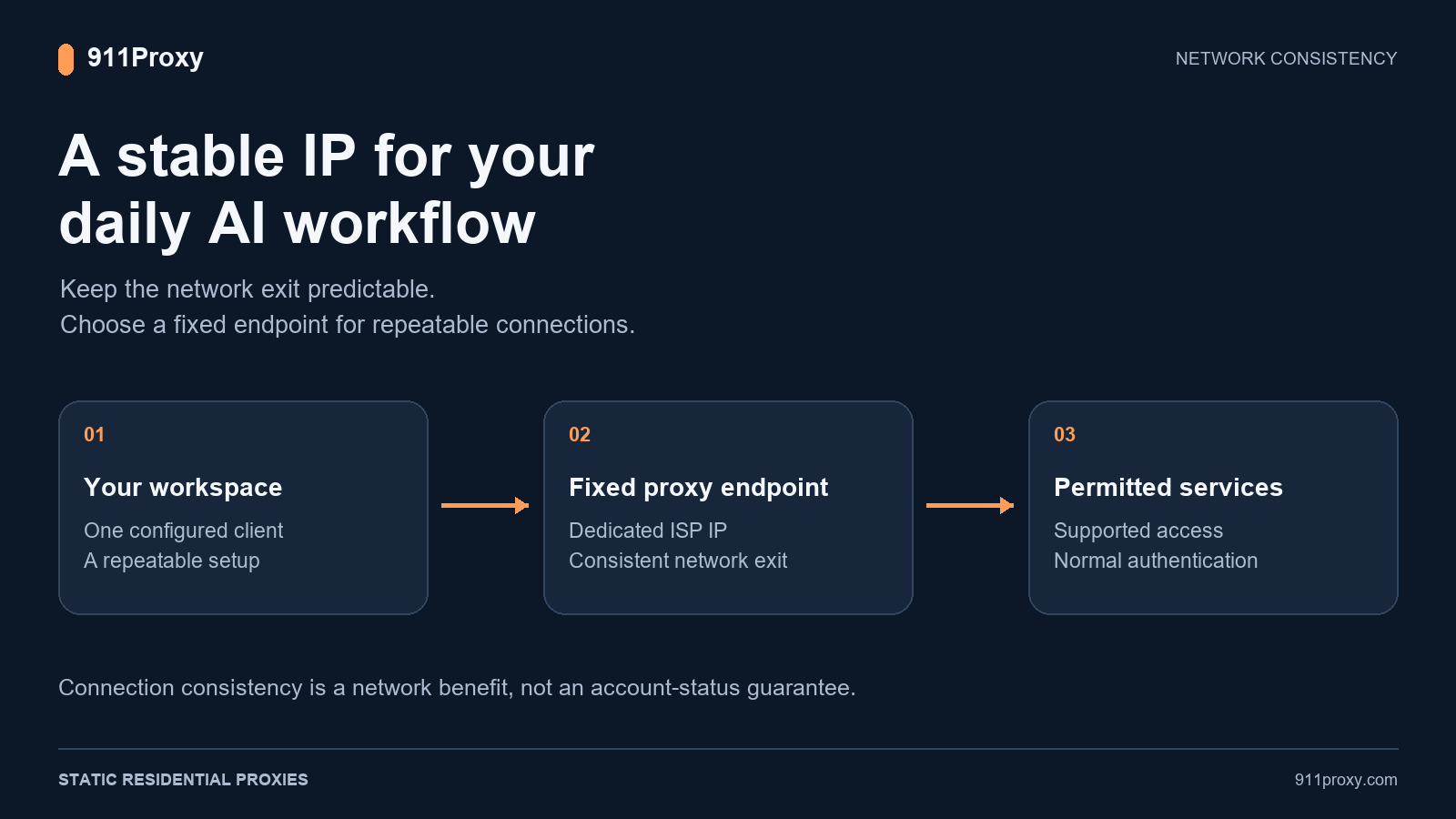
A proxy forwards supported application traffic through an intermediary. With a static residential proxy, the intended benefit is retaining one residential or ISP-associated outbound IP over the purchased period, subject to the provider's service and renewal conditions. A rotating service changes addresses according to its session configuration.
That distinction matters when you want to reproduce a connection problem, maintain a consistent workspace or avoid changing network variables between sessions. If the endpoint, credentials and client configuration stay fixed, you can compare today's connection with yesterday's more meaningfully.
Static does not mean that every connection will succeed, that an IP has a perfect history or that a website must accept it. An IP address is also separate from browser cookies, account credentials and device settings. Changing one does not automatically reset the others.
The original post presents specific theories about actions that supposedly raise or lower an account score. It does not provide enough independently verifiable evidence to turn those theories into a reliable operating manual. There is no basis here to promise that a particular operating system, subscription timing or proxy product prevents suspension.
Anthropic's official safeguards guidance describes policy violations, unsupported account-creation locations and terms violations as possible reasons for account restrictions. Its verification guidance says verification prompts can occur during routine integrity checks and when accessing certain capabilities. A verification prompt alone therefore does not establish the hidden score claimed in the post.
Choose a proxy for its networking properties. Service eligibility, verification requirements and account decisions remain with the service provider. If an account is suspended, use the official appeal process.
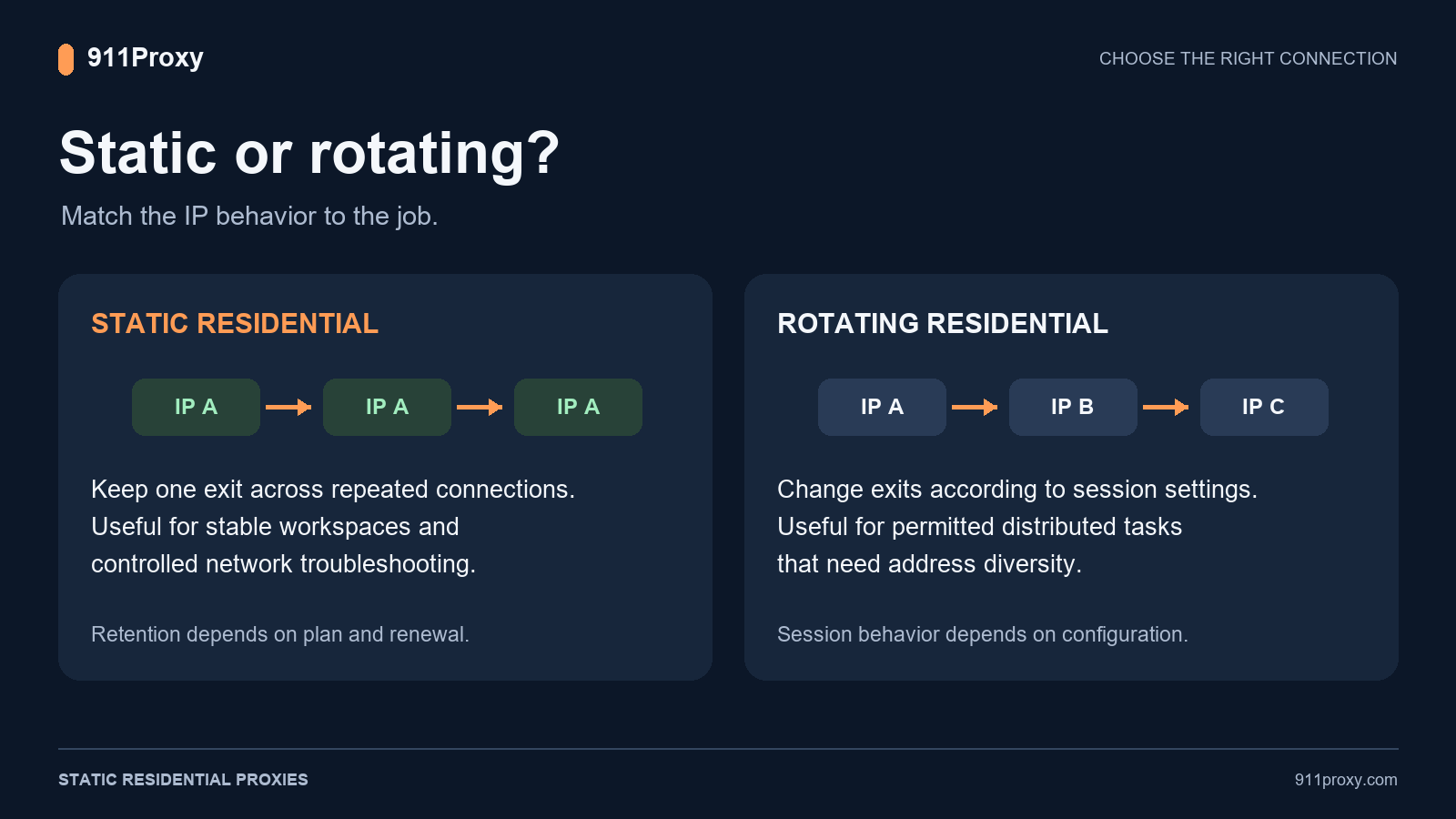
Start with the workflow rather than the largest advertised IP pool. A fixed endpoint can be useful for a daily work environment, permitted regional website testing, or a development setup where you need a known outbound address. It gives you one fewer changing variable to track.
For example, suppose a developer encounters intermittent connection failures. Keeping the same proxy endpoint while checking the client, authentication and destination makes the investigation more controlled. Switching providers and exit addresses after every error makes it harder to identify which change helped.
A rotating service may better fit permitted distributed collection tasks that need multiple exits. An existing direct connection may already be sufficient for a stable single-location workspace. Static residential proxies are most useful when you can name the requirement that a fixed ISP address solves.
911Proxy's static residential offering provides dedicated ISP-assigned IPs hosted on data-center infrastructure. The product page lists HTTP and SOCKS5 support, per-IP plans, included traffic and renewal availability. This combination is relevant when you want a persistent endpoint with a defined purchase period.
Select the location and term available for your actual workload, and confirm the supported destination and protocol before expanding usage. Check current pricing and inventory on the product page rather than assuming every region or duration is always available. 911Proxy is an independent proxy provider; this guide does not imply endorsement by Anthropic.
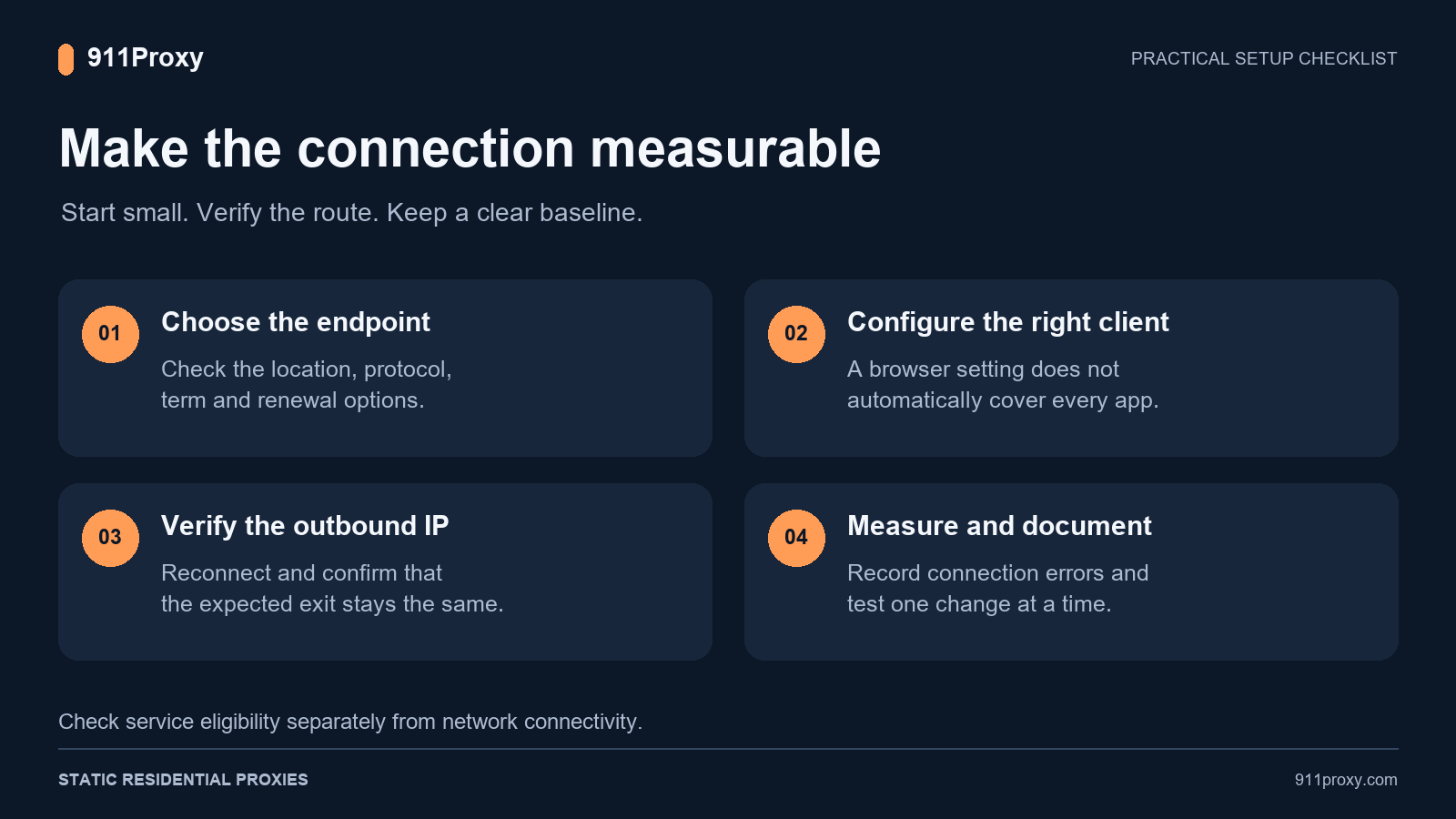
Anthropic's Claude Code network documentation documents HTTP/HTTPS proxy configuration through environment variables and explicitly says SOCKS proxies are unsupported. For Claude Code, check the HTTP connection option and follow that documentation. Do not assume SOCKS5 works in every application simply because the proxy provider offers it. This protocol support is not a guarantee that any particular provider's endpoint will be accepted by the destination.
No proxy can guarantee an account outcome. A fixed IP addresses network consistency; it does not replace verification, account eligibility or platform rules.
Not necessarily. 911Proxy describes its product as ISP-assigned residential IPs hosted on data-center infrastructure. Evaluate the actual service architecture and endpoint behavior rather than relying on the label alone.
First identify the error. Invalid credentials, an expired proxy plan, a network timeout and an account restriction need different responses. Keep a record of what failed before changing the connection.
For a workflow that benefits from a fixed ISP exit, begin with a small, measurable setup. Verify the route, test your real application and retain the configuration that works. Explore 911Proxy static residential plans to choose an endpoint and term that match that requirement.

This blog will explore the importance and role of proxy IP, and why we need to use proxy IP for social account management.

In the digital era, enterprises have paid more and more attention to the expansion of the global market and the development of online business. With the popularization of the Internet and the trend of globalization, overseas IP agents, as a key tool, play

When businesses choose to use residential agency IP, they can benefit from improved data collection efficiency, market research support, stable network connectivity, optimization of advertising and marketing campaigns, and enhanced privacy protection. How
 由于政策原因,该服务暂不支持中国大陆地区,敬请谅解!